An Inflation Backlog and a Dismal Fed Forecast
Producer Prices Are Rising Faster Than Consumer Prices

We wrote a few days ago about the 4.2% spike in the Consumer Price Index, reported early in June by the Bureau of Labor Statistics. Contemporaneous data from the BLS undermines any hope that the inflation boogeyman intends only a short visit to the economy. The Personal Consumption Expenditures index from the Bureau of Economic Analysis (the Federal Reserves preferred inflation measure) late in June confirms the BLS reports.
Prices at the Producer / Wholesale Level
Data from the BLS on prices in the production channels of the economy suggests strongly that the price pressure driving upward the PCE and CPI is building. The Producer Price Index measures the price changes experienced by producers of products and providers of services. These changes occur earlier in the goods and services pipeline than the Consumer Price Index.
- The PPI rose 1.1% in May after rising also 1.1% in April and 0.7% in March.
- Year-over-year, the PPI rose 6.5%, which is the largest increase since November 2022.
- Excluding food, energy, and trade services, the PPI still was up 0.8% in May, which is the highest increase in more than four years.
- For the 12 months ending May, the PPI excluding food, energy, and trade services rose 5.1%.
In short, price pressure experienced by producers is high earlier in the flow of goods and services, which portends continuing upward pressure on consumer prices, although the PPI and CPI / PCE can diverge. Because so much of the price pressure is not from energy, the end of the Iran War (if it ends) is not likely to ease completely consumer price inflation.
Prices by the Federal Reserve Preferred Index
When assessing the state of prices in the economy at the consumer level, the Federal Reserve prefers the Personal Consumption Expenditures Price Index published by the Bureau of Economic Analysis. The PCE more adeptly and quickly adjusts to changes in consumer spending choices than the CPI. Although the two measures can differ in any given month, the differences were not material in May.
- In May, the PCE price index rose 0.4% over all categories and 0.3% excluding food and energy.
- Year-over-year, the PCE increased 4.1% to nearly match the CPI across all goods and services but rose a lower but still elevated 3.4% excluding food and energy.
The Impact of PCE and PPI on Interest Rates
After each meeting of the Federal Reserve, the Board members and Federal Reserve Bank presidents offer their forecasts for PCE and the Federal Funds Rate. After the June meeting at which the Board members and presidents did not have May 2026 PCE data, the forecasts for inflation and interest rates did not suggest easing of consumer affordability challenges.
- The median forecast for 2026 PCE was 3.6% with an optimistic reduction to 2.3% in 2027 and 2.0% in 2028. The longer range predictions reflect the confidence that the Board and Presidents have in their monetary policy. In March 2026, the PCE forecast was 2.7%.
- The Federal Funds Rate forecast showed little sign of easing of interest rates with the Fed’s interest rate holding at 3.8% through 2026 and dropping only to 3.4% in 2028.
For at least the next two years, the median forecast is for not more than two quarter-point interest rate reductions. The range of forecasts included at least one rate hike with some members predicting two.
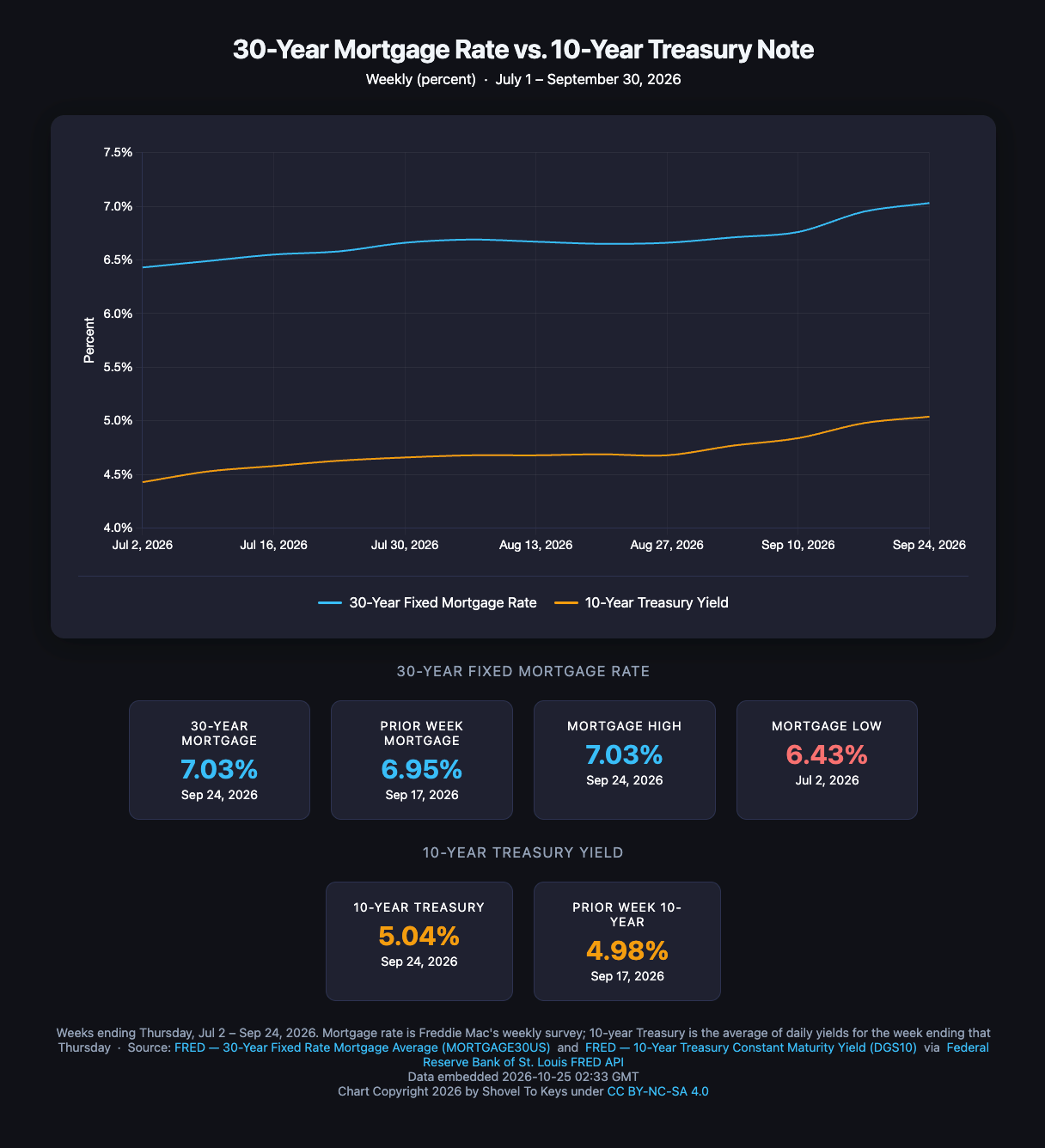
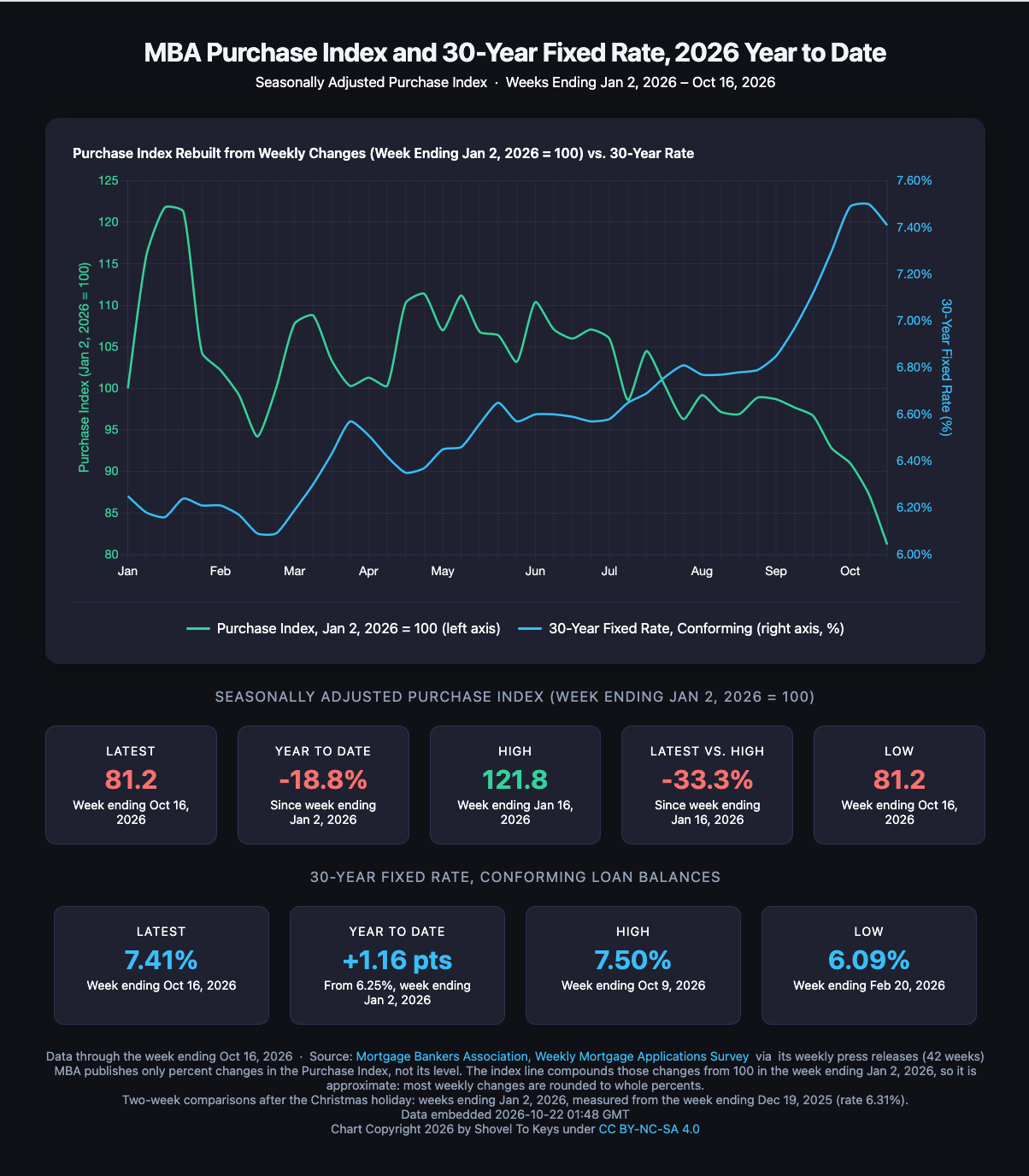
With the Federal Reserve’s short-term benchmark interest rate likely to change little over the next two years, borrowers of all kinds can expect little relief from prevailing rates for mortgages, consumer loans, and other borrowings. If interest rates will not ease over this time frame, home affordability will not improve through reduced mortgage rates. We know also from the last Shovel To Keys post that the 21st Century ROAD to Housing Act is not the answer. If solutions exist, they are not conspicuous.
The BLS explains in some detail (under the heading “Comparing the PPI with CPI”) how prices measured at the producer level are not entirely correlated with consumer prices.