Housing Starts Plummet While Existing Home Inventory Stagnates
New Home Sales Were Down in May 2026 7.3% from April and 6.8% from May 2025, Surprising Only the Inattentive

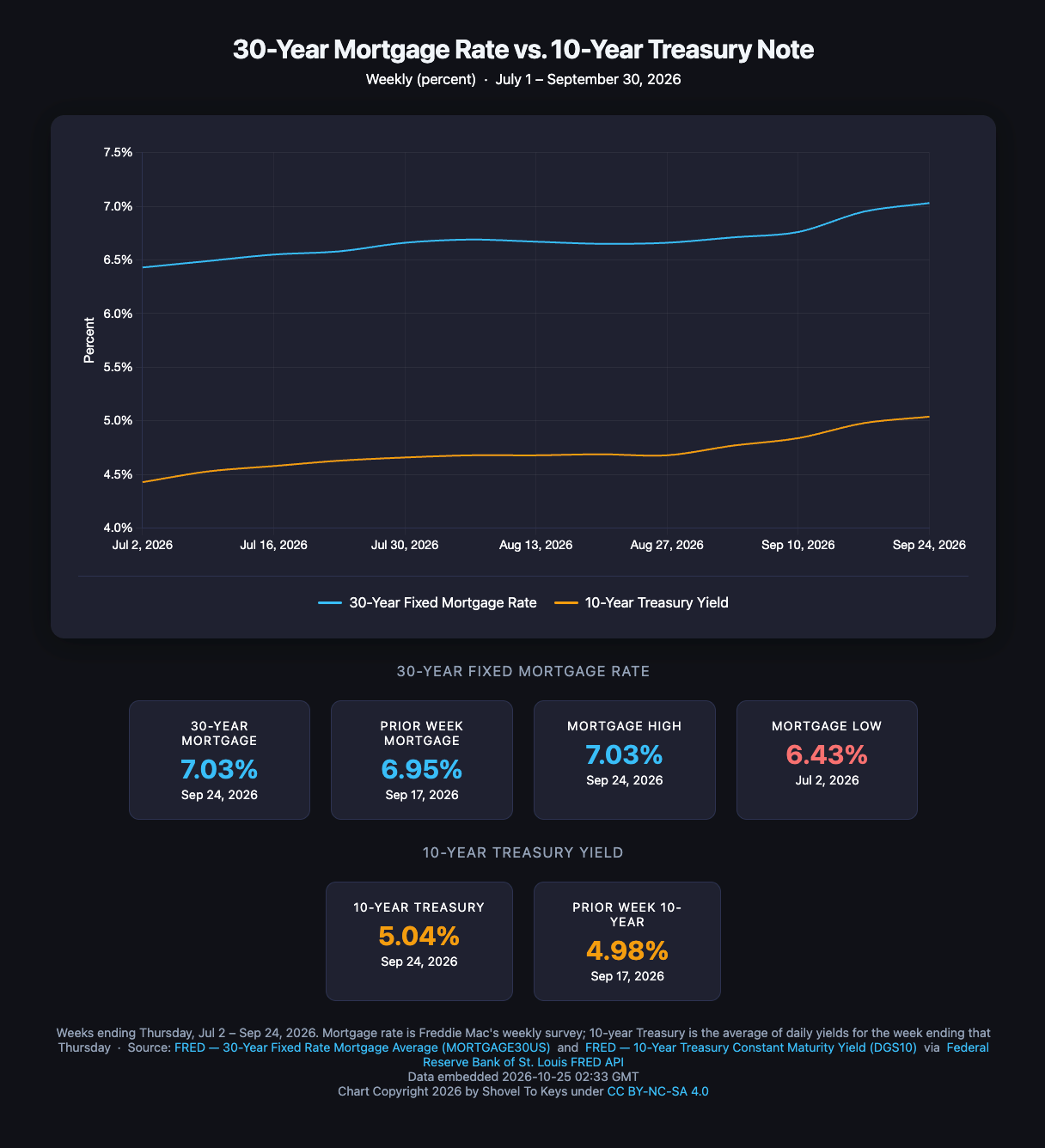
Through 2025, the large new home builders sustained sales volume with interest rate buy downs to 4.99% and even 3.99% for as long as six years. Those buy downs are expensive for builders to offer. As the 2026 new year home selling season emerged from the winter, many builders dropped these programs or shortened the duration of buy downs to reduce selling cost and improve margins. Builders hoped that declining mortgage rates would replace the costly incentive.
We trust that Shovel to Keys informs and occasionally entertains. Please share our work.
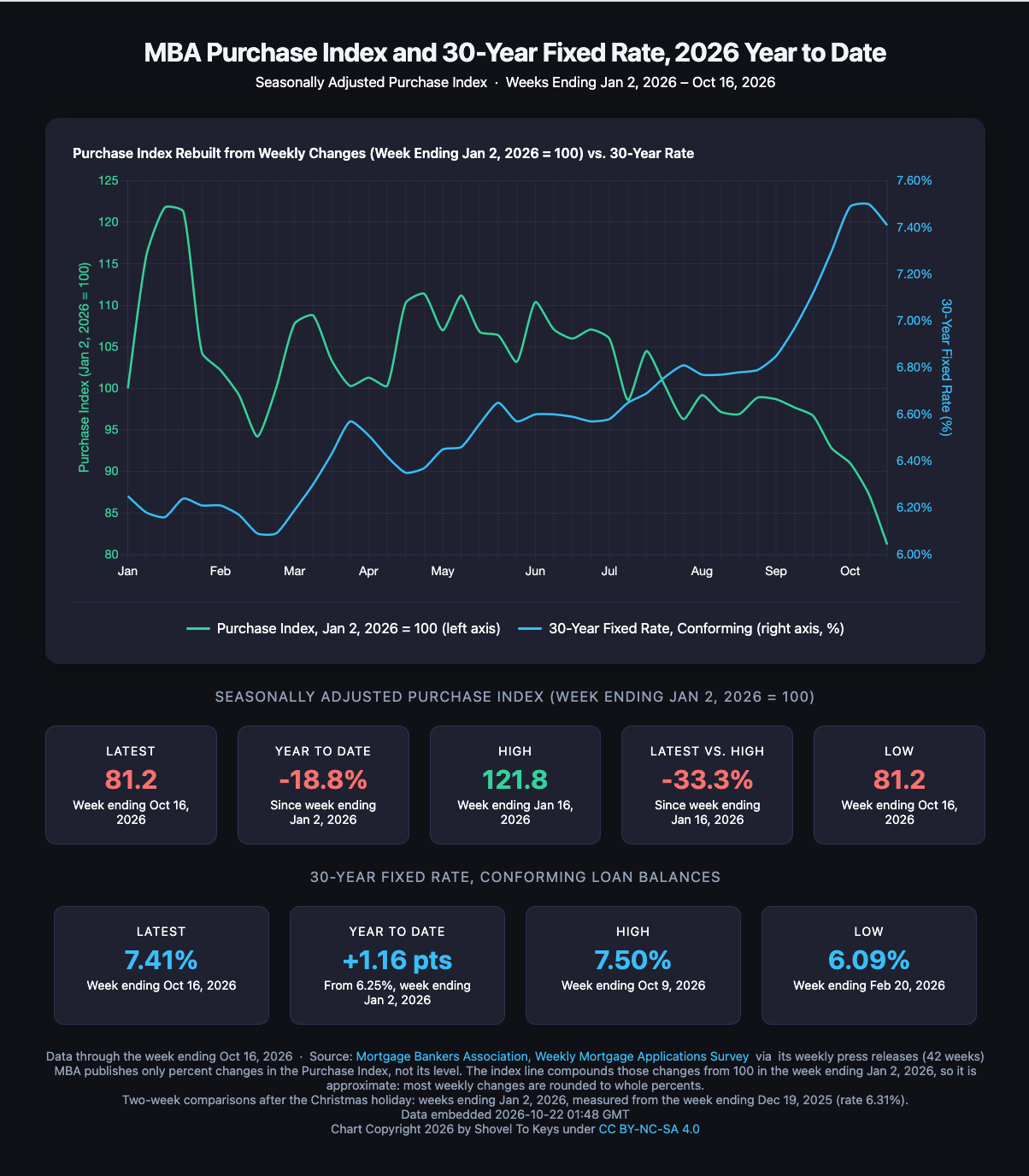
As we wrote last month about the new home sales data for April, the Iran War drove interest rates up sharply and upended builder optimism. The enthusiasm damage continued in May. The Census Bureau reported:
- New home sales fell 7.3% from April to 580,000, after dropping 6.2% from March to April by 41,000. The decline was distributed quite unevenly across the nation with the West dropping 26.9% and the Midwest rising over 16%.
- Year-over-year, the decline was 6.8 percent from 622,000 in May 2025.
- The 12-month trailing average declined, of course, to 661,000, putting the May sales total 12.2% below the trailing average.
- The May sales decline has pushed the 12-month trailing average down 2.5% in 2026 and is now the lowest since September 2023.
Despite the steep decline in sales, new home inventory did not spike.
- Overall inventory rose only 2.3% from April and was still down 1.4% from May 2025.
- The bulk of the inventory expansion was in the Census Bureau category “not started”, which rose to 117,000 from 108,000 month-to-month. “Not Started” homes in builder inventory are lots listed for sale by a builder with the requirement that the buyer engage the builder to construct a home on the lot.
- The “Under Construction” category rose only 2,000 units, and the “Completed” category did not change from April 2026.
These data confirm that new home builders have slowed their “spec” construction markedly in the few months since the Iran War began. The abundance and timeliness of market data allows builders to adjust quickly to market conditions
A substantial drop in sales might suggest lower prices, but May new home sales brought higher median and average prices.
- The median new home price was $424,900, up 2.0% from April but little changed from the prior year.
- The average new home price was $540,600, which is 7.8% higher than April and 5.0% above the May 2025 average.
The price data reveals that the mix of new homes sold in May shifted slightly upward among the bulk of sales. Higher interest rates push out of the market the buyers at the lowest price points. The steep increase in the average, however, reflects a substantial rise in sales at the highest price points where buyers are far less interest-rate sensitive.
If our work informs you, please share the information.
The Affordability Impact
The quantity of new homes in the construction pipeline continues to decline, constraining supply. Builders and buyers have ready access to current interest rate data that drives rapid adjustments in the market. With information available so quickly and updated so frequently, the supply of housing is unlikely to lose synchronicity with demand. New home prices are not likely to fall.
Instead, new home builders will continue to adjust construction starts to match demand. As we have noted, home building is not a philanthropic enterprise. By closely matching supply to demand, builders avoid price-cutting, diminish costly incentives, and preserve margin. This behavior will not change.
After the Great Financial Crisis in 2008, home purchase affordability found aid in the crushing decline of home prices driven by unprecedented foreclosure volume. From the GFC through 2021, affordability enjoyed support from the unprecedented persistence of very low cost of borrowing with mortgage rates remaining at 5.42% or lower for over thirteen years from January 2009 to May 2022.
With interest rates unlikely to diminish substantially for at least the next 18 months and builders adept at preserving price and margin, home purchase affordability needs another unprecedented event.
Is the 21st Century ROAD to Housing Act, the white knight? If it were, the infinitesimally small number of illegally voting non-citizens knocked the knight off his horse. Nonetheless, the Act will be the topic of a coming post because the Act eventually may pass through a Congressional override or late night Presidential change of course.