More ROAD Details Point to a Short and Pointless Destination
Trumpeted as a the "Heart of the Bill", the Local Government Grant Program Is Underfunded and Unappealing

[Updated (Substantially) July 6 @ 8:47p]
We may test your patient attention with this dive into the 21st Century ROAD Act. Maybe you will appreciate the humor in the futility of the so-called “Heart of the Bill”, at least according to one biased report. Hopefully, you will be persuaded that the ROAD is a political distraction that should be given little attention.
The Innovate At Your Own Risk Vapor Fund
Section 208 of the ROAD Act, entitled the “Innovation Fund”, authorizes a $200,000,000 annual fund to be administered by the DOGE-decimated Department of Housing and Urban Development. The fund dollars are intended to allow HUD to provide up to $10,000,000 but not less than $250,000 per grant to local governments that “facilitate the expansion of the supply of attainable housing and that supplement initiatives the eligible entity has carried out, or is in the process of carrying out”. Section 208(b)(3)(C).
The “Attainable Housing” Requirement
Let us not forget to understand the legislative meaning of important words. “Attainable housing” under Section 208 is “housing that serves households earning not more than 120 percent of the area median income, if the majority of the housing units are affordable to households earning not more than 60 percent of the area median income”. In other words, the locality’s innovations must create or be geared toward creating housing at least 50% of which is affordable to households with an income of 60% of the median income of the households in the locality.1
Looking to the data collected by the U.S. Census Bureau, the median household income nationwide in 2024 (the last year for which the USCB has reported) was $83,730. Sixty percent of that median income is $50,238.
To assess the “attainable housing” requirements of the ROAD Act, we must next calculate the portion of $50,238 that a 60%-median-income household could allocate to housing. Two guidelines are well-known:
- Applying data from the Bureau of Labor Statistics that households with a median income of $50,238 spend approximately 40% of the household income on housing (including utilities and household maintenance and furnishing), the Innovation Fund money targets the creation of housing with an annual cost of $20,095, which equates to a monthly housing cost of roughly $1,675.
- Using the thirty-percent rule often cited as a guide for measuring a home buyer’s or renter’s payment capacity, Section 208 targets housing with an annual cost of $15,071, which is a monthly cost of $1,255.
In other words, the 60%-median-income requirement of Section 208’s “attainable housing” definition requires housing with a total monthly cost between $1,255 (the 30% guideline) and $1,675 (the 40% BLS guideline).
Blending Rental and Purchase Housing
These amounts include all housing costs, not just rent or the mortgage payment. The next step in evaluating the “attainable housing” requirement on the impact of the Innovation Fund is to determine the portion of total housing cost that a 60%-median-income household could apportion to rent or a mortgage. According to the Bureau of Labor Statistics Consumer Expenditure Survey for 2024, more than 45% of the median family’s housing expenditure pays utilities and other non-rent household costs. The other 55% pays rent (or a mortgage). Fifty-five percent of $1,675 is $921 and of $1,255 is $690.
Putting this all together, using the BLS CES data above that blends rental and owned housing and using the U.S. Census Bureau median income, attainable housing for a household at 60% of the U.S. median income is housing with a rent or mortgage between $690 and $921 each month. A brief search on any home rental or sale website (e.g., Zillow or ApartmentList) reveals very little housing that can be rented or purchased for such a low monthly payment. Not surprisingly, housing at this price point is very small, poorly located, or exceedingly dilapidated. To create new housing at these price points would be nearly impossible given costs of land and construction.
Attainable Rental Housing
If we exclude consideration of “attainable housing” for purchase and consider only families that rent by using only the BLS CES data for renter households, the prognosis improves. For renters, the portion of total housing cost that is devoted to utilities and other household costs (excluding rent) drops to 29.45%. Rent is the remaining 70.55%, putting attainable housing rent at a much higher range between $885 and $1,181 per month and approximately 28% higher than the $690-to-$921 blended rent / purchaser range) .
“Attainable rental housing”, then, is a home for which the rent is between $885 and $1,181 per month. At this price point, the quality of housing improves noticeably as compared to housing in the $690-to-$921 range, but still is well below the median rent nationwide, which ranges from $1,155 to over $2,000 (excluding extreme markets like New York City and California metros). While housing at this cost may be “attainable” for lower income Americans, it still is not feasible to construct, except at in a size that is too small for a family or in the least desirable locations. Remembering that housing is not normally a philanthropic venture, the Innovation Fund seems misaligned with the reality of the economics of new rental home creation.
If local governments assess the feasibility of “attainable housing” as we have above, very few will apply for Innovation Fund grants, especially because Section 208 implies strongly that grant victory will require a showing of success, not merely intention. Given the rent price point that is “attainable housing”, the probability of achieving meaningful success must be very low in most parts of the United States. If localities know that “attainable housing” is not likely to be financially achievable, the localities are unlikely to invest attainable housing dollars with only the hope of recouping the expenditure and with the knowledge that success is improbable.
Attainable Owned Housing
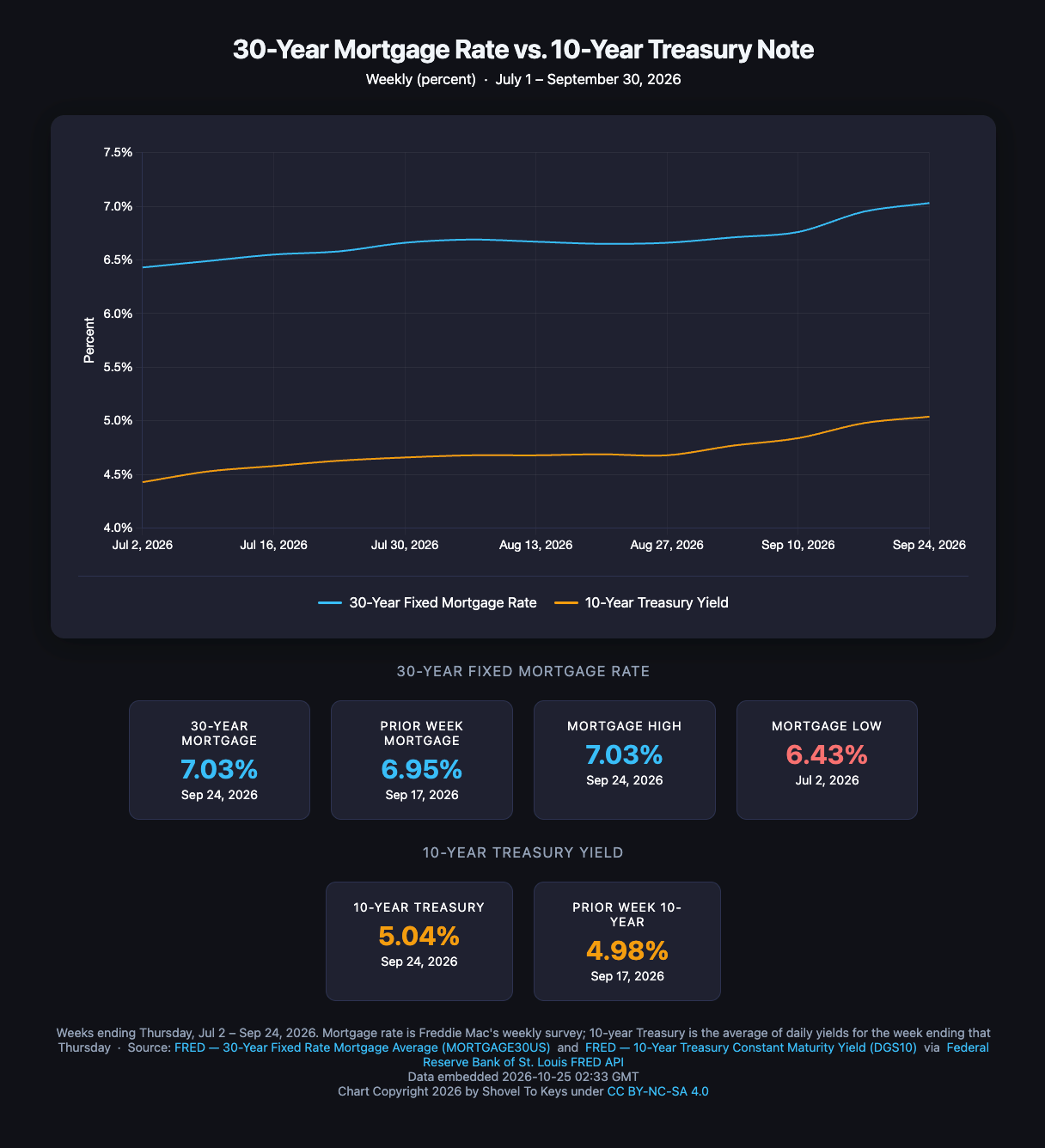
The outlook for Innovation Fund efficacy in the attainable owned housing segment is even more bleak. Assuming a housing cost burden of 30% of median income on a median household income of $50,238, the household cash flow available for all housing costs is $1,255, as explained above. But, let us be even more liberal (with a small “l”) and assume that all of the $1,255 can be applied just to a mortgage payment and that innovative families will find some way to pay taxes, insurance, utilities, and maintenance. Even with a mortgage payment of $1,255, the mortgage principal (not including property tax or insurance) would be less than $200,000 for a mortgage at a 6.5% annual interest rate. The median home price in the United States today is more than double $200,000.
To assess the impact of the Innovation Fund to facilitate construction of attainable housing for sale we gathered data from the realtor.com median home price portal. The portal contains home price data from 936 core-based statistical areas (a geographic region definition created by the U.S. Office of Management and Budget). We filtered the list of CBSAs to eliminate any with a population of less than 100,000 and a median home price of $200,000 or less. There are 19.
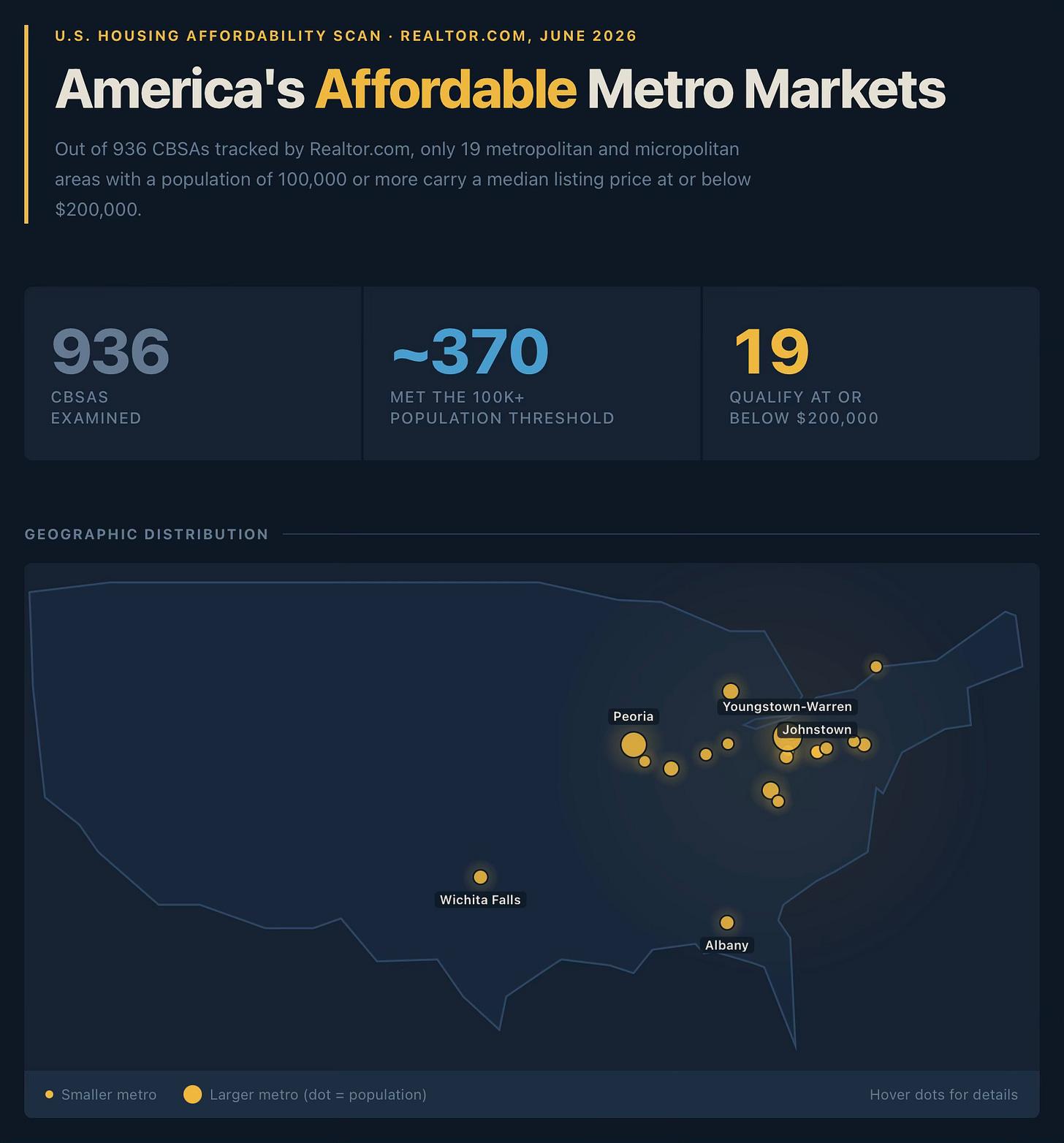
Pennsylvania leads the list with five metro areas offering a median home sale price under $200,000. West Virginia has four. Ohio, Illinois, and Indiana each have two. Michigan, New York, Texas, and Georgia round out the list with one each.
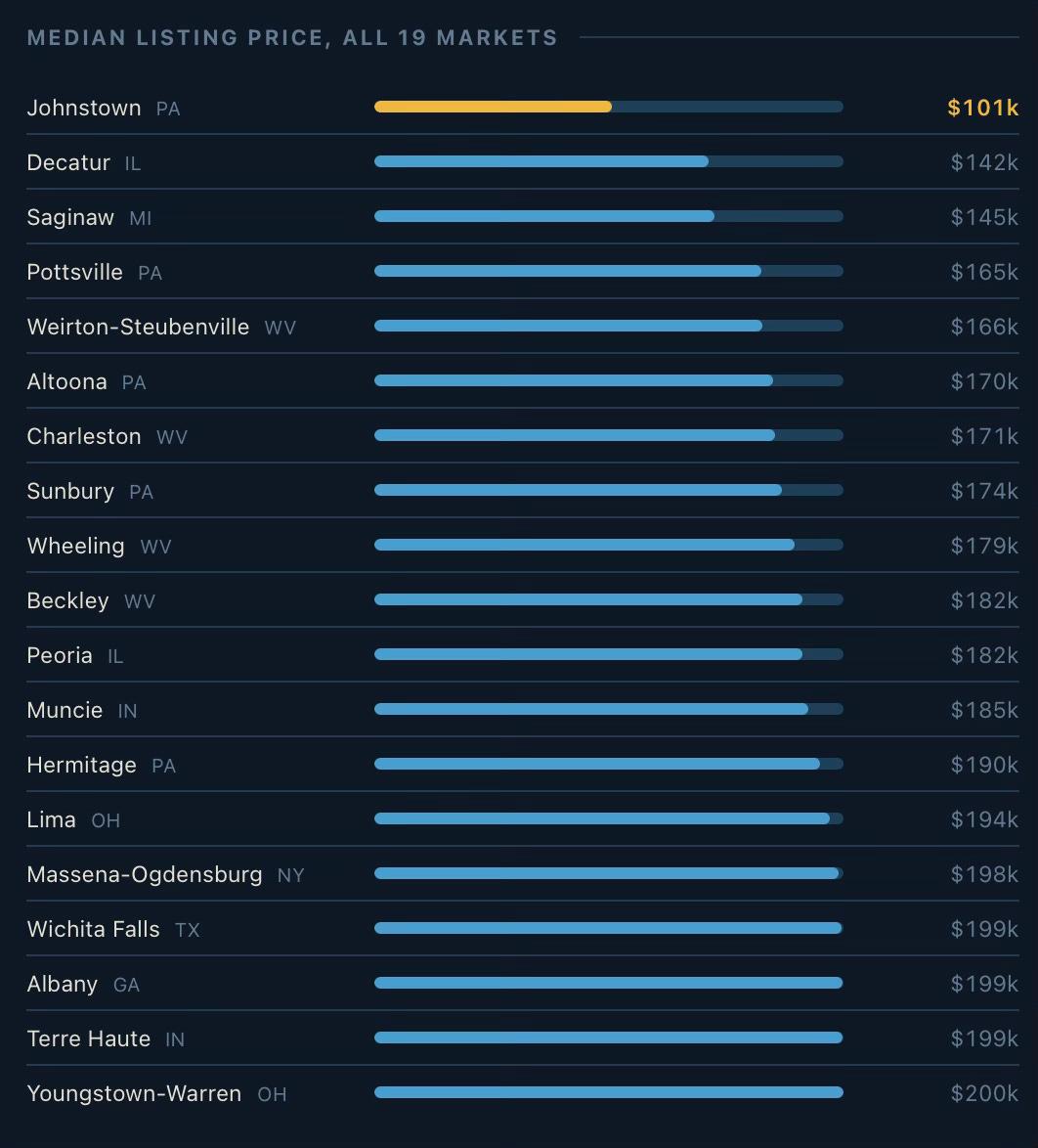
Put again in the context of “attainable housing”, about five percent of all the U.S. metros with a population of 100,000 offer houses for sale with a median price below $200,000. A local government not on this list likely would have more success catching wind in an net than spending precious budget dollars trying to create attainable for-purchase housing.
If Section 208 is the “heart of the bill”, Congress has set a new standard for Grinch-like legislation. The innovation required of local governments to deliver attainable housing will be of a kind that even Einstein or Jobs or Musk could not expect to achieve.
$200 Million Is A Drop In The Bucket
Even if “attainable housing” were feasible broadly in the United States, the Innovation Fund amount is dwarfed by the need. According to the National Zoning Atlas, there are 33,295 potentially eligible local governments that have zoning authority. We will not do the absurd calculation of allocating $200,000,000 among 33,295 local governments not only because the result would be exceedingly stingy, but because Section 208 of the ROAD Act establishes a $250,000 minimum Innovation Fund grant.
From a pool of $200,000,000 annually, 800 grants of $250,000 could be awarded. Even if every grant were of the smallest amount, only 2.4% of all local zoning authorities could receive a grant. The remaining 97.6% of local governments would receive no Innovation Fund support and would have no incentive from the ROAD Act to foster attainable housing. If HUD awards the 25 grant minimum demanded by the statute, well a whopping 0.07% of all local zoning municipalities will receive Innovation Fund dollars. The impact of the Innovation Fund is likely to be less than the impact of Tunisia on the 2026 FIFA World Cup.
Oh, and Then
There is the small matter of appropriation of the $200,000,000. Like most authorizing legislation, the ROAD Act does not actually provide the dollars for the Innovation Fund. Congress or the President or both might not put any money in the Fund.
There is also the matter of implementing the Innovation Fund. The ROAD Act gives HUD one year to establish the Innovation Fund and create a list of eligible local governments. Section 208(b). Given the woeful state of HUD personnel resources, one year may deliver little or stretch into the next presidency. Even if HUD acted with amazing alacrity, the Innovation Fund would have no impact until late 2027 or beyond.
Let’s Talk Sometime Between 2050 and 2059
The legacy of Congressional action on housing is one of lengthy hiatuses.
- The Homestead Act of 1862 (in the midst of the civil war)
- The National Housing Act of 1934 (in the midst of the Great Depression)
- The Servicemen’s Readjustment Act of 1944 (in the midst of World War II)
- The Fair Housing Act of 1968 (in the midst of the Civil Rights Movement)
- The Housing and Economic Recovery Act of 2008 (in the midst of the Great Financial Crisis)
- The ROAD Act of 2026 (in the midst of intense political division and daily media attention to housing unaffordability)
The median number of years between major housing legislation in Congress is 24 years. The average is almost 33 years. Housing will not be on the legislative agenda in Washington for quite a long time.
The ROAD Act was exemplary of 2026 American government. Politicians trumpeted false claims of achievement that nonetheless will relieve pressure on Congress for years, if not decades. The legislation touched only niches and fringes of the housing market. Lots of fanfare, very little meaning. Is this what the Founders intended 250 years ago?
We can expect Congress to act ineffectively again on housing sometime between 2050 and 2059. Tell Siri to put a reminder on your calendar.
The Solution Is Not in Washington
Little debate can arise with the proposition that the federal government cannot and will not solve or even meaningfully address housing affordability. Where then can remedies be found? In future posts, Shovel to Keys will explore:
- Regulatory changes at the Government Sponsored Entities (Fannie Mae and Freddie Mac) and the federal government mortgage guarantors (the VA, FHA, and USDA).
- Local governments
- And, by far the most rich in possibilities, non-governmental entities
Whatever the solutions, they must be scalable and not focused on small even if very important segments of the housing market. We will do our best not to rail again about the ROAD Act.